-
Commissions & Fees
-
Investment Offerings
-
Trading Platforms
-
Customer Service
-
Education and Research
-
Trustworthiness
As the world becomes increasingly digital, cryptocurrency has gained widespread acceptance as both a payment method and investment vehicle.
Consequently, demand for secure and user-friendly crypto wallets has surged exponentially.
In this article, we’ll compare two of the most popular crypto wallets on the market: Coinbase and Metamask, helping you make an informed decision about which one suits your needs.
Let’s begin with a direct side-by-side comparison of both wallets and their respective services:
Comparison Table
| Criteria | Coinbase | Metamask |
| Pricing | Free to download and use. Network fees for trading and 1.49%-3.99% for fiat purchases | Free to download and use. Gas fees for blockchain transactions, 1% fee on every transaction. |
| Ideal customer | Beginner to advanced traders and investors | Intermediate to advanced traders and DeFi-focused investors |
| Offerings | Wide range of crypto assets, user-friendly interface, mobile app, vault feature, multiple payment methods | Supports Ethereum-based and other decentralized finance (DeFi) assets, browser extension, mobile app, gas fee control, multiple payment methods |
| Key Differentiators | Highly regulated, insurance for digital assets, full suite of crypto services, all major crypto assets | Strong emphasis on dApps, compatibility with Web3 and DeFi protocols, ETH staking, easy-to-use wallet for ERC-20s (Ethereum-based cryptocurrencies) |
| Account Minimums | None | None |
About the Services
Coinbase is a digital asset exchange platform offering comprehensive services, including a user-friendly cryptocurrency wallet alongside trading and investment options.
Founded in 2012, Coinbase has established itself as one of the most recognized and trusted names in the crypto space. With over 56 million verified users, Coinbase has made cryptocurrency investing accessible to a massive audience.

The Coinbase wallet represents one of many services provided by Coinbase and is available as both a mobile app and desktop extension. This crypto wallet delivers high-security standards through two-factor authentication, cold storage, and insurance coverage for digital assets.

Metamask, by contrast, originated as a browser extension crypto wallet designed for the Ethereum blockchain, though it now supports an extensive selection of features and blockchains to serve diverse crypto enthusiasts and compete with platforms like Coinbase.

Metamask delivers users a simple and intuitive interface along with complete control over their private keys. As a non-custodial wallet, Metamask prioritizes user privacy and security while offering many advanced features and services typically found on crypto exchanges.
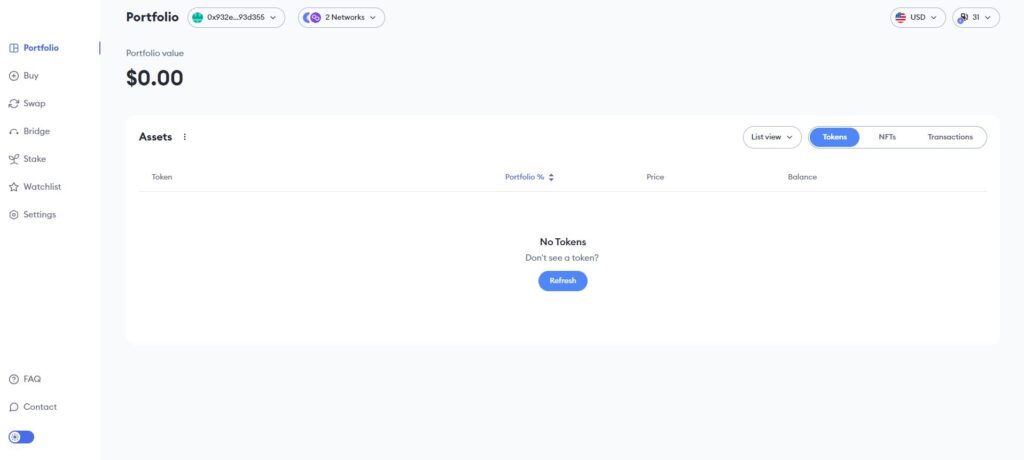
These features include fiat-to-crypto payment methods, dApp integrations, and a user-friendly mobile app for seamless on-the-go access.

In essence, these wallets share more similarities than differences. While key distinctions exist that we’ll explore, let’s first highlight the common features and services users can expect from both.
Comparison
Similarities
- Both Coinbase and Metamask are crypto wallets that enable users to store and manage their digital assets via mobile app or browser extension.
- Both provide convenient fiat-to-crypto on-ramps via card, ApplePay, and more.
- Both support the buying, selling, and storing of dozens of crypto assets.
- Both wallets are intuitive to use and offer various features that appeal to different types of traders and investors.
- Both Coinbase and Metamask provide two-factor authentication and other security measures to protect users’ digital assets, including self-custody of private keys.
- Both crypto wallets support NFTs and offer access to dApps
Differences
Beyond design differences in each wallet’s user interface, the key distinctions to consider are pricing, target audience, and core offerings.
Pricing:
Regarding fees, Coinbase charges a percentage fee on fiat-to-crypto purchases ranging from 1.49% to 3.99%, plus additional fees for trading and converting cryptocurrencies and network fees.
Metamask charges a flat 1% fee on every transaction, plus gas fees for operating on blockchain networks.
Ideal Customer:
While both Coinbase and Metamask serve similar customer bases, subtle differences create distinct ideal users.
Coinbase’s straightforward and user-friendly interface makes it ideal for beginner to advanced traders and investors seeking to manage their digital assets effortlessly.
Though highly user-friendly, Metamask better suits intermediate to advanced crypto enthusiasts.
Users particularly interested in DeFi and dApps on Ethereum or other blockchain networks will likely find Metamask the preferred choice.
Offerings:
Coinbase supports all major cryptocurrencies, provides two mobile apps for its exchange and crypto wallet, includes a browser extension, and offers Web3/dApp integrations alongside a vault feature that delivers enhanced security through cold storage.
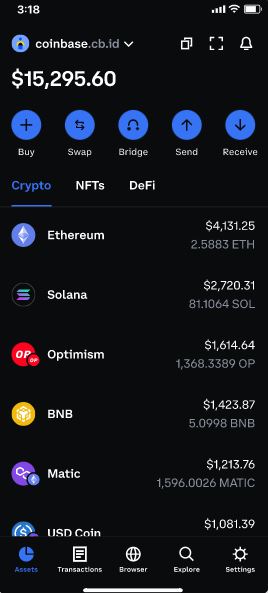
Metamask features an extensive selection of DeFi- and dApp-related assets, data privacy capabilities, a user-friendly mobile app for its crypto wallet, a browser extension, ETH staking, and comprehensive Web3/dApp integrations.

Key Differentiators:
A primary difference between Coinbase and Metamask is that Metamask primarily focuses on interacting with decentralized applications (dApps) on the Ethereum network.
Coinbase functions more as a comprehensive platform for buying, selling, and storing cryptocurrencies, offering a complete suite of trading, staking, and other crypto services.
Coinbase provides insurance for funds stored in their wallet, whereas Metamask operates as a non-custodial wallet where users bear sole responsibility for securing their funds.
Fee-wise, Coinbase charges 1.49%-3.99% for fiat transactions, while Metamask applies a uniform 1% fee plus blockchain gas fees.
Coinbase supports staking for a broad range of crypto assets, while Metamask only offers ETH staking.
Finally, Coinbase operates under strict regulation by multiple financial authorities, which provides reassurance for some users, whereas Metamask remains unregulated.
Conclusion
In summary, both the Coinbase and Metamask crypto wallets represent excellent choices suitable for virtually all types of crypto investors.
However, users who already maintain or plan to establish a Coinbase account would likely benefit from a crypto wallet designed specifically for its ecosystem of crypto services.
Moreover, beginners or casual investors will probably find the Coinbase wallet offers a simpler and potentially more familiar user experience.
Conversely, if you’re a Web3 native or primarily focused on the decentralized world of blockchains and dApps, Metamask arguably represents the superior option.
While major assets like regular (unwrapped) BTC are absent from Metamask, it remains the preferred wallet for most DeFi enthusiasts.
Ultimately, both wallets accommodate beginners and experts alike, so we encourage everyone to explore each option firsthand to determine which interface, features, or other aspects better align with your unique crypto requirements.
FAQs:
Q: Which service is better for beginners?
A: Coinbase is generally considered superior for beginners due to its intuitive interface and comprehensive customer support options. Metamask may better suit advanced users comfortable with the Ethereum network and ERC-20 tokens.
Q: Which service offers more tradable assets?
A: While Coinbase provides a broader selection of major digital currencies, Metamask offers greater variety in ERC-20 tokens. The better choice depends on which digital assets interest you most.
Q: How do the fees compare between Coinbase and Metamask?
A: Coinbase charges 1.49%-3.99% fees for fiat-to-crypto purchases plus standard network fees, while Metamask charges gas fees for blockchain transactions and a flat 1% on all transactions.
Q: Which service has better customer support?
A: Coinbase offers comprehensive customer support options, including a help center, email, phone, and live chat. Metamask provides customer support through a help center, forums, and customer agents. Both services strive to deliver timely and helpful support to their users.
Q: Which service is more secure?
A: Both Coinbase and Metamask prioritize security and implement various measures to protect user funds. Coinbase provides insurance against theft and hacks, while Metamask offers advanced security features like hardware wallet integration and two-factor authentication.